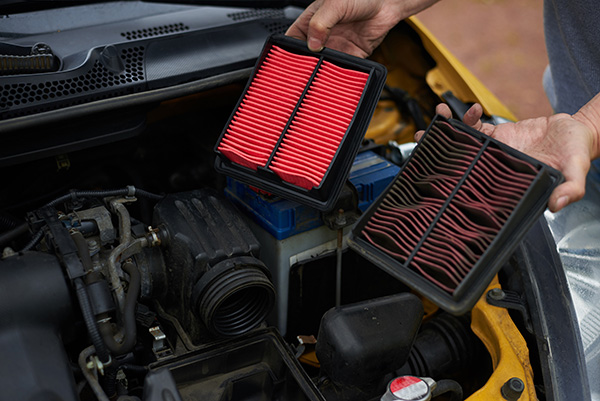
Air filters are easy to forget because most of the time your car keeps driving like nothing is wrong. Then one day the A/C airflow feels weak, the windshield fogs up faster, or the engine feels a little lazier than it used to.
Replacing filters on schedule is one of those small wins that keep the car feeling consistent.
Dirty Air Filter Signs
Some filters slowly clog, and you barely notice until you replace them, and the difference is obvious. Other times, the symptoms are pretty clear if you know what to watch for.
Here are common signs the engine or cabin filter may be overdue:
- Weak airflow from the vents, especially on higher fan settings
- A musty smell when the A/C first turns on
- More dust inside the car than usual
- Slower acceleration or a slightly rough idle on some vehicles
- A filter that looks dark, packed with debris, or deformed
If any of these show up, it’s usually worth checking the filters before you chase bigger explanations.
Engine Air Filter Replacement
Most engines do well with an engine air filter change somewhere around 12,000 to 30,000 miles, but the right interval depends on where and how you drive. Dusty roads, construction areas, wildfire smoke, and lots of stop-and-go can load a filter quickly.
A clogged engine air filter restricts airflow, and the engine has to work with less breathing room. You may notice a drop in responsiveness or fuel economy, though it can be subtle. If you do your own checks, pull the filter and look for heavy debris, dark discoloration, or tears along the edges.
Cabin Air Filter Replacement
Cabin air filters typically need replacement more often than people expect, often every 12,000 to 20,000 miles, sometimes sooner. They catch dust, pollen, soot, and road grime before it reaches the cabin vents. In heavy traffic areas, they can clog faster because the air outside the car is dirtier.
When the cabin filter is overdue, you often feel it in the airflow first. The fan sounds like it’s working hard, but the air coming out of the vents feels weak. It can also contribute to lingering odors because the filter is holding moisture and debris.
Driving Habits That Clog Filters Faster
Short trips and frequent idling are tough on cabin filters because the system doesn’t always dry out fully. Moisture can linger, which can make odors more likely, especially when combined with dirt trapped in the filter. Parking under trees can also pack the filter with leaves and fine organic debris.
Engine filters take the hit from dusty environments and constant airflow demand. If you drive through construction zones, gravel roads, or windy conditions, the filter can load up well before a mileage-based interval. This is why filter changes should be treated as regular maintenance, not a once-in-a-while surprise.
Cabin Filter Odors And Foggy Windows
A musty smell at startup is often the first clue that airflow and moisture are mixing in an unhelpful way. Sometimes it’s just a dirty cabin filter, and replacing it makes an immediate difference. If the smell comes back quickly, the HVAC system may be holding moisture, which is common in humid weather or when the A/C runs constantly.
Foggy windows can also point to airflow problems. If defrost takes longer than normal, the cabin filter may be restricting how much air reaches the windshield. If you’re wiping the glass more than usual, it’s worth checking the filter and the condition of the air coming through the vents.
Choosing The Right Filters
Not all filters are equal, and the cheapest option is not always the best value. A quality cabin filter can reduce fine dust and odors better, and a quality engine filter can hold debris without restricting airflow too early. The goal is proper fit and consistent filtration, not an extreme performance promise.
Installation matters too. Cabin filters can be installed backward, which reduces airflow and can make noise. Engine filters need to seal properly around the edges, or dirt can bypass the filter entirely. If you are unsure, a quick inspection during service is usually enough to confirm everything is seated correctly.
Get Air Filter Replacement in Burbank, CA with Future Auto Service
At Future Auto Service in Burbank, CA, we can check both filters, replace them with the right fit for your vehicle, and look for any airflow issues that are making the cabin feel stale.
Call or schedule an inspection today.
We’ll help you get clean airflow again without overcomplicating it.