Fuel system problems can make a car feel weak, rough, slow to start, or unreliable. You press the gas pedal, but the engine hesitates. You turn the key, but the engine cranks longer than usual. The check engine light may come on, or the vehicle may feel like it is running out of power when you need it most.
The confusing part is that several fuel system problems can feel similar to the driver. A bad fuel pump, clogged injectors, or restricted fuel filter can all affect how much fuel reaches the engine. The right repair depends on where the restriction, pressure loss, or delivery problem is happening.
How The Fuel System Should Work
Your engine needs the right amount of fuel at the right time. The fuel pump moves fuel from the tank toward the engine. The fuel filter, if serviceable on your vehicle, helps catch debris before it moves farther through the system. Fuel injectors spray a controlled amount of fuel into the engine so it can mix with air and burn properly.
When everything works correctly, fuel pressure stays steady, and the injectors deliver a clean spray pattern. When something goes wrong, the engine may run lean, misfire, hesitate, stall, or lose power under load.
Fuel delivery problems often show up when the engine needs more fuel. That is why a vehicle may idle normally but struggle during acceleration, on hills, during highway merging, or in hot weather.
Signs Of A Weak Fuel Pump
A weak fuel pump may not stop working all at once. It can lose pressure slowly, work only when cool, or struggle when the tank is low. Since the pump must supply fuel under pressure, any weakness can become apparent when engine demand rises.
Common fuel pump symptoms include hard starts, long cranking, stalling, loss of power, surging, or hesitation when accelerating. The vehicle may run fine for a short drive, then act up once it gets hot. In some cases, you may hear a whining sound from the fuel tank area.
Fuel pump problems should be tested before replacement. Wiring, relays, fuel pressure regulators, clogged filters, and poor connections can create similar symptoms. A pressure test helps confirm whether the pump is truly delivering what the engine needs.
How Clogged Injectors Affect The Engine
Fuel injectors need to spray fuel in a clean, even pattern. If they become dirty, clogged, or restricted, one or more cylinders may not receive the right amount of fuel. That can create rough idle, misfires, poor fuel economy, hesitation, or uneven acceleration.
Injector problems can be caused by fuel contamination, carbon buildup, age, poor fuel quality, or long periods of sitting. A partially clogged injector may still work, but not well enough under load. The engine may feel shaky or weak even though fuel pressure is acceptable.
Injectors can also fail electrically. In that case, the issue is not dirt but the injector’s ability to open and close correctly. Testing helps separate a dirty injector from an electrical injector fault, wiring issue, or engine mechanical problem.
What A Restricted Fuel Filter Can Do
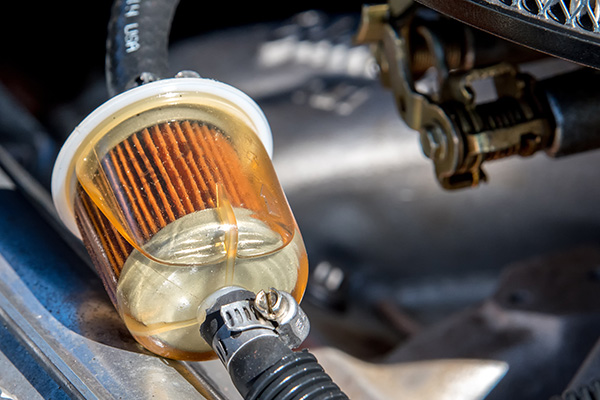
Some vehicles have a serviceable fuel filter that needs to be replaced at certain intervals. Others have filters built into the fuel pump assembly or designed as part of the fuel tank system. The service approach depends on the vehicle.
When a fuel filter becomes restricted, it can limit fuel flow. The engine may start normally and idle well, then struggle when more fuel is needed. Acceleration may feel flat, the engine may hesitate, or the vehicle may lose power on hills or on the highway.
A restricted filter can also make the fuel pump work harder. Over time, that extra strain can contribute to pump failure. If the vehicle has a serviceable fuel filter, replacing it at the proper interval is part of regular maintenance that helps protect the rest of the fuel system.
Warning Signs Fuel Delivery Needs Testing
Fuel system problems can overlap with ignition, airflow, sensor, and transmission concerns. Still, these signs are worth checking:
- Long cranking before startup
- Engine stalls after starting
- Hesitation when pressing the gas
- Loss of power uphill
- Rough idle
- Surging at steady speed
- Poor fuel economy
- Check engine light
- Engine misfire codes
- Whining noise near the fuel tank
These symptoms do not prove one specific part is bad. They show that the vehicle needs an inspection before the problem becomes worse or leaves you stranded.
Why Testing Matters Before Replacing Parts
Fuel system parts can be expensive, and replacing the wrong one does not solve the problem. A weak fuel pump, clogged injector, restricted filter, bad sensor, intake leak, ignition misfire, or exhaust restriction can all make the engine feel weak.
A proper diagnostic process may include checking fuel pressure, fuel volume, injector operation, scan tool data, misfire counts, fuel trims, air intake condition, and related codes. The goal is to determine whether the engine is missing fuel, getting too much fuel, or experiencing a different issue entirely.
Good testing also helps prevent repeat repairs. If a clogged injector was caused by contamination, the source needs attention. If a fuel pump failed due to electrical voltage issues, the wiring and relay should be checked as well.
Get Fuel System Repair In Burbank, CA, With Future Auto Service
If your vehicle is hard to start, hesitates, stalls, loses power, or feels weak when accelerating, Future Auto Service in Burbank, CA, can test the fuel pump, injectors, fuel filter, and related engine systems.
To repair the fuel system before a small drivability issue becomes a bigger problem, contact us to schedule an appointment.