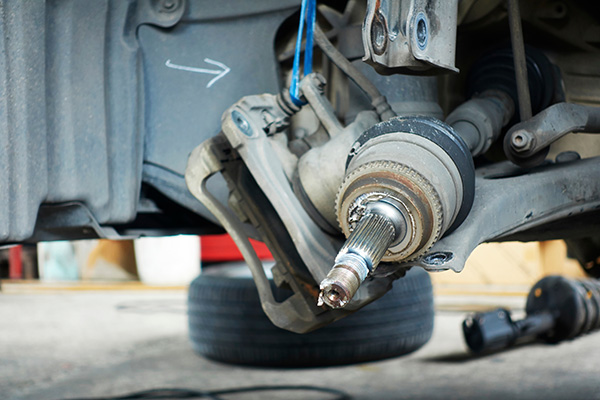
A split CV boot may not change how the car drives right away. You might first notice grease inside a wheel or hear that an inspection found the boot damaged. That early stage can offer a chance to protect the joint, but don't assume the joint is still healthy just because it is quiet.
Once grease escapes and water or dirt enters, the joint can begin to wear. The repair choice depends on its condition, the amount of contamination, and the vehicle’s design. A boot repair can restore grease containment, but it cannot reverse damage already present on the joint’s working surfaces.
The CV Boot Protects the Joint’s Moving Surfaces
A CV axle transfers power while the suspension moves and, at a steered wheel, while the wheel turns. Its joints need lubrication throughout that movement. The flexible boot keeps the specified grease around the joint and helps prevent road debris, moisture, and grit from reaching the bearings and tracks.
A boot can split at a fold, loosen at a clamp, or be damaged by contact with another part. Grease may spread onto nearby suspension components as the axle rotates. The location of the grease can help identify the affected boot, but inspect both ends of the axle for damage and secure sealing.
A Torn CV Boot Does Not Give a Reliable Wear Timeline
There is no dependable number of miles you can drive with an open boot before the joint fails. A small, fresh tear in dry conditions is different from a boot that has been open on wet roads and through construction debris. The amount of grease lost and the contamination inside can vary considerably.
Waiting for a clicking noise removes some of the benefit of finding the tear early. A quiet joint may still contain abrasive material, and visible grease outside the boot doesn't show how much lubrication remains inside. Prompt inspection gives the technician a better chance to determine whether a boot repair is still reasonable.
CV Joint Clicking Often Appears During Turns
Repeated clicking or snapping while accelerating through a turn can point to an outer CV joint. The joint is working at a greater angle during a tight turn, which can make worn surfaces more noticeable. A noise that follows wheel speed and changes with power is useful information to bring to the inspection.
The sound still needs to be confirmed. A loose wheel-well liner, suspension joint, or another component can click or pop during steering. Noise travels through the vehicle, so the corner you hear most clearly is not always the failed side. Check both axles and nearby steering components before choosing a replacement.
CV Joint Wear Can Also Cause Acceleration Vibration
An inner joint problem may produce a shudder or vibration when the vehicle accelerates. It can feel different from a tire imbalance because it may change with engine load rather than appearing steadily at one road speed. Some joint or axle faults also create a clunk when power is applied or released.
Engine mounts, wheel bearings, tires, and transmission-related problems can create similar sensations. The technician needs to connect the vibration to the driving conditions and inspect the relevant components. A torn boot makes the joint worth investigating, but it should not prevent the inspection from considering other possible sources.
CV Boot Repair Requires a Joint in Suitable Condition
Where the design allows boot replacement, check the joint for contamination, excessive play, rough movement, and damage. Cleaning and inspection may be needed to assess the joint's working surfaces. If the joint is suitable for reuse, you'll need the correct boot, grease, and clamps to restore protection.
Boot repair and complete axle replacement involve different labor and parts costs. On some vehicles, replacing the axle is the more practical option even before major noise develops. On others, a boot kit may preserve a sound original joint. The recommendation should explain the condition found and why that option fits the particular axle.
A Worn CV Joint Needs More Than a New Boot
If the joint has developed significant wear, a new cover will not make it quiet or restore its fit. Depending on the application, you may need to replace the joint or the entire axle. The replacement must match the vehicle, and installation should follow axle-nut torque, fastening, and any related service procedures.
Continuing to drive with a badly worn joint can cause more vibration or loss of drive. A loud repeated clunk, severe shaking, or a sudden change in how power reaches the wheels calls for stopping safely and arranging help. Don't try aggressive turns or hard acceleration to determine which axle is making the noise.
Get CV Boot and CV Joint Inspection in Burbank, CA, With Future Auto Service
If grease is appearing inside a wheel or the car clicks during turns, Future Auto Service in Burbank, CA, can inspect the boots, joints, and surrounding components. We can explain whether the joint is still suitable for a boot repair or whether wear makes a joint or axle replacement the better option.
Contact us to schedule a CV axle inspection before the symptoms become more severe.