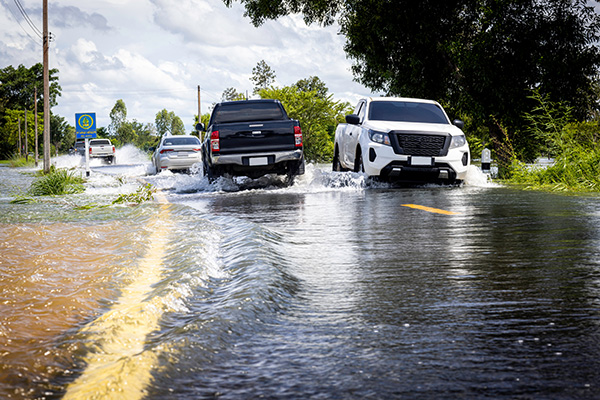
Wet fall roads put more demand on your tires than dry summer pavement. Rain reduces traction, standing water can cause hydroplaning, and cooler temperatures can change tire pressure enough to affect how the car feels.
A tire does not have to be bald to struggle in wet weather. Tread depth, pressure, age, alignment, and overall condition all play a part. Before the rainy season gets heavier, we like to check whether the tires still have enough grip and whether anything underneath the vehicle is causing uneven wear.
Tread Depth Has a Big Effect on Wet Traction
Tread grooves are designed to move water away from the contact patch so the rubber can stay against the road. As those grooves get shallower, the tire has less room to move water out of the way.
That is when wet braking and cornering start to suffer. A tire can still feel acceptable on dry pavement but become noticeably less confident in heavy rain. At our shop, we measure tread depth across the full width of the tire instead of checking only one spot.
Uneven Wear Can Make a Tire Worse in the Rain
A tire with good tread in the center but a nearly bald shoulder is not in good condition. Alignment problems, worn suspension parts, incorrect pressure, and missed rotations can all create uneven wear.
Inner-edge wear is especially easy to miss because you cannot always see it while standing next to the vehicle. During an inspection, we check the inside and outside shoulders, compare all four tires, and look for patterns that point toward alignment or suspension problems before installing another set.
Low Tire Pressure Reduces Stability
Cooler fall temperatures often bring lower tire pressure. A tire that was set correctly during warm weather can lose enough pressure to trigger a warning once the mornings turn colder.
Underinflated tires flex more, build extra heat, and can feel less responsive during steering. They also wear the outer shoulders faster. We set pressure to the vehicle manufacturer's specification and check for slow leaks if one tire keeps dropping lower than the rest.
Cracking and Tire Age Should Not Be Ignored
Some tires age out before the tread wears out. Sunlight, heat, weather exposure, and long periods of sitting gradually harden the rubber.
Look for cracking in the sidewalls and between the tread blocks. Small surface marks do not always mean immediate replacement, but deeper cracks, brittle rubber, bulges, or visible damage deserve attention. Older rubber also tends to provide less grip on cool, wet pavement, even when the tread still looks respectable.
Hydroplaning Is a Sign Your Tires Are Struggling
Hydroplaning happens when water builds between the tire and road surface faster than the tread can move it away. The tire starts riding on top of the water instead of staying firmly connected to the pavement.
Worn tread increases the risk, especially at higher speeds and in deeper standing water. If the steering suddenly feels light or the car starts drifting when you hit wet sections of road, slow down and have the tires checked. Tire condition is only one part of hydroplaning, but shallow tread gives the water much less room to escape.
Fall Is a Good Time to Check Alignment and Rotation
Tires that wear evenly usually perform better and last longer. If the vehicle has been pulling, the steering wheel sits off-center, or one tire is wearing faster than the others, fall is a good time to address it.
Rotation helps spread normal wear across the set, while alignment corrects wheel angles that can damage the tread. Regular maintenance matters here because once one shoulder is badly worn away, rotating or aligning the vehicle cannot put that rubber back.
Do Not Wait Until the Tires Look Completely Worn Out
The final stage of tire wear is easy to recognize, but wet-weather performance can decline before a tire looks obviously finished. That is why we do not rely on appearance alone.
We look at tread depth, age, pressure, wear pattern, sidewall condition, and how the vehicle is being used. If the tires are already close to replacement and autumn rain is approaching, replacing them before the worst weather arrives is usually smarter than trying to stretch them through another season.
Get Tire Service In Burbank, CA, With Future Auto Service
If your tires are worn, uneven, low on pressure, or you are not sure how much wet-weather grip they have left, Future Auto Service in Burbank, CA, can inspect the tread, tire condition, alignment, and pressure before fall roads get wetter.
Schedule a tire inspection and make sure the car is ready to handle rain with the traction it needs.